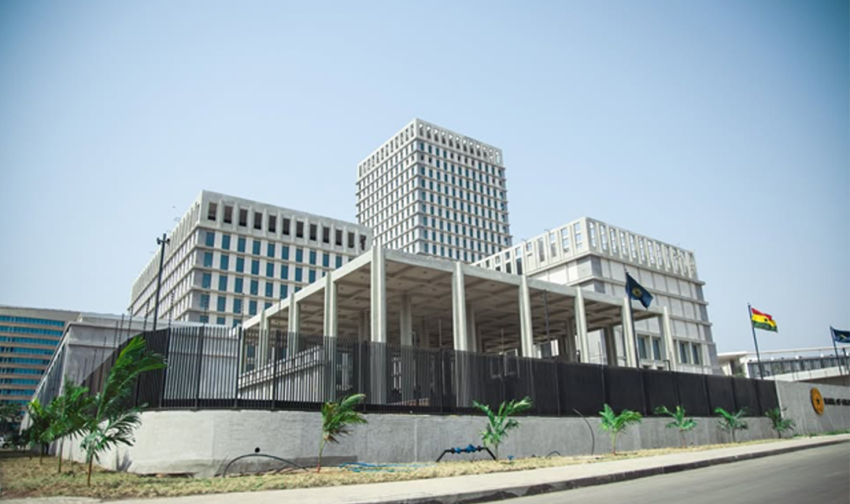
image from the Bank of Ghana Facebook page
OPE, the Bank of Ghana announced it lost a total of GH¢15.6 billion for 2025. That is a big number! How does it affect me?
The BoG is not a Commercial Bank
This means the Bank of Ghana’s purpose is not to make a profit. It does not run on the deposits of individuals or companies. Its client is the Government of Ghana. Its job is to keep prices stable, protect the cedi, and make sure Ghana’s financial system and economy do not collapse.
It is the referee of Ghana’s entire economy. Every decision it makes flows from those responsibilities. The keyword here is referee, so a big brother or sister of sorts that makes sure everyone is playing fair and doing well to the best of their capability.
Okay, so what? It still lost billions.
Yes, that is true. So let’s see where the losses are coming from and what it means, but note this is a simplified version.
In the beginning
To understand where this all started, we need to go back a few years. For a long time, the government of Ghana was borrowing money to run the country. Roads, schools, salaries, projects. At some point, the people lending the money were nervous. What we owe is getting too big. We either stop borrowing or borrow at a higher interest rate.
But charley, this is not good news. Loans are part of the budget. You can’t just take it away like that. This is where Ghana was in 2022. So we went to the IMF to help us out. The IMF agreed, but with conditions: a Debt Exchange Programme.
What happened was
Think of it this way. You borrowed GH¢100 from Kwame and GH¢800 from Ama. Now you cannot pay, but you need money. So you renegotiate. In this scenario, Ama is the Bank of Ghana. Your trusted family member. The one who is your big sister. So, Ama was asked to make the biggest sacrifice, or else everything might collapse. She lent you GH¢800 but is only getting back GH¢400 plus a little interest. In real numbers, that sacrifice was GH¢48 billion
This is what happened in 2022, and the negative equity the BoG is carrying today directly goes back to that moment.
Then Came Inflation
With the DDEP behind it, the BoG now had a second crisis to deal with, and that was inflation. Your income and expenses did not change, but the number of things you could do with your income was getting smaller and smaller. The economics behind it was that suddenly there was a lot of money with businesses, individuals, families, and the whole economy. When everyone suddenly has a lot of money and supply stays the same, prices will likely rise, and that’s what happened. Now, the BoG has to fix. The problem was obvious, but you cannot just go to people and businesses and tell them to hand over their hard-earned money.
How they did it
How central banks usually handle this problem is they go to commercial banks and make them an offer: give me your cash to hold for a while, and I will pay you interest on it. The banks agreed because it was safer to give the government money. Plus, you had a guaranteed interest just from them holding your money. Gradually, getting loans from the banks becomes harder, and the interest rate on your savings account reduces. They handed a lot of the cash. That cash was now sitting with the BoG, not circulating in the economy. Less money flowing around meant less pressure on prices. Inflation started to fall.
Did it work?
The plan worked! Inflation started to fall at the end of 2024, all the way through 2025 and even more by March 2026.
Unfortunately, fighting inflation came at a cost. You remember the BoG was paying the banks to hand over their cash, right? That was how they were able to reduce inflation. But those interest payments cost them GH¢16.7 billion in 2025. That GH¢16.7 billion shows up on the BoG’s books as a loss.
In our next post, we will talk about how the Gold Program factors into all of this and what it means for you! Read that here
Discover more from ONE PAGE ECONOMICS
Subscribe to get the latest posts sent to your email.