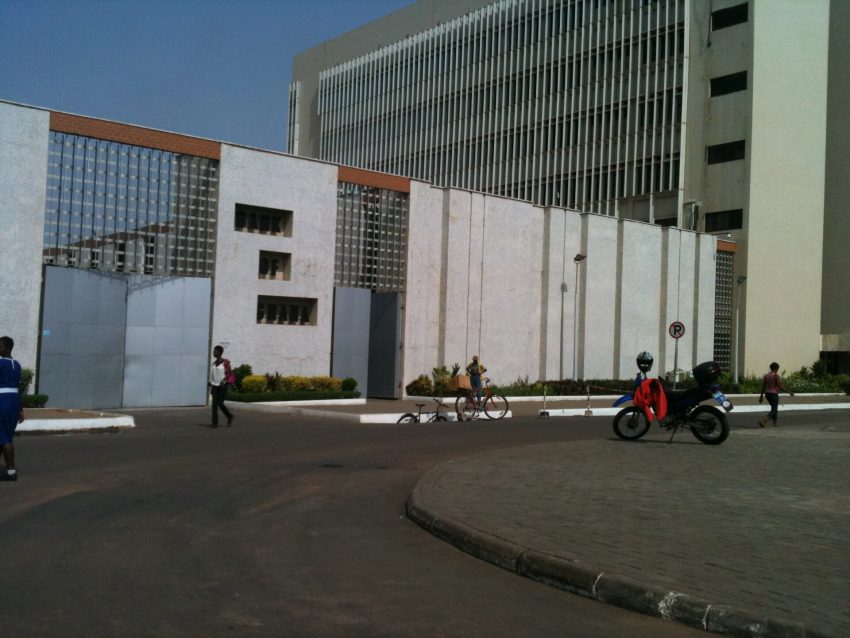
image By Natsubee – Own work, CC BY-SA 3.0, Link
Last week, we provided readers with a simplified explanation of the reported BoG loss. As a recap, we talked about how the IMF and fighting inflation contributed to the loss. You can read more about that here. This week, we continue with a breakdown explaining how the Gold program contributed to the loss and what it means for you.
The Gold
Ghana is one of the world’s largest gold producers. Gold is our biggest export. Yet in 2021, the Bank of Ghana had 8,740 kg of gold in store. The problem with that is that most of what we had in store was borrowed money from foreign investors, and borrowed money disappears the moment people lose confidence in you. Gold doesn’t. Unfortunately, when we faced crises in 2022, we had to quickly run to the IMF for help. Imagine we had more gold in store, we could have managed a bit longer.
What did they do?
So the BoG decided to do something about it and is one of the reasons it launched the Domestic Gold Purchase Programme and started buying gold directly from local miners, big mining companies and small artisanal miners. The BoG buys the gold and pays the miners in Ghana Cedis. The gold is then refined and either stored in Ghana’s reserves vault or sold on the international market for US dollars. The US dollars we get also go back into our stores.
Well, the plan worked! By 2025, Ghana had gone from having 8,740kg of gold in reserves to over 38,000kg during 2025.
So where does the “loss” come from?
Well, the thing is that when the BoG pays miners for the gold, it pays them at the forex bureau exchange rate. The forex bureau exchange rate is typically higher than the BoG’s own official rate. The BoG knows this, alright, but does this intentionally to keep miners from smuggling their gold out of the country. Unfortunately, when the BoG records the transaction in its accounts, it uses the official rate. And here is the problem with that:
Imagine the BoG wants to buy gold worth $100 from a miner.
The official rate is GH¢10 to $1. The forex bureau rate is GH¢12 to $1.
Remember that the BoG pays the miner at the forex bureau rate, which is GH¢12 to $1 in this example.
So, imagine again that BOG bought $100 of Gold from miners, which means it paid them GH¢1,200.
Stay with me.
Unfortunately, when the BoG records the transaction in its books, it uses the official rate, which is GH¢10 to $1. So on paper, the BoG went out with GH¢1,200 to buy gold from miners, but only came back with GH¢1,000 worth of Gold.
So where did the GH¢200 go? That is the extra money they gave the miners to encourage them to sell the gold to official channels instead of smuggling it. This is what also shows up as a loss for the BoG. Although this is a simple version of what is happening, it gives you a very good grasp of the situation.
So, Why Should You Care?
You see, from the explanation, BoG did a lot of good things, but it cannot continue losing money because of that. They have to manage it. If they do not do that, then the government has to step in and give them money. That money will come from the public purse, which means from you. The good news, however, is that they are actively trying to manage it. The policy rate is coming down, which means the cost of fighting inflation will reduce. The gold programme is also being restructured. So, you don’t have to panic now.
Discover more from ONE PAGE ECONOMICS
Subscribe to get the latest posts sent to your email.