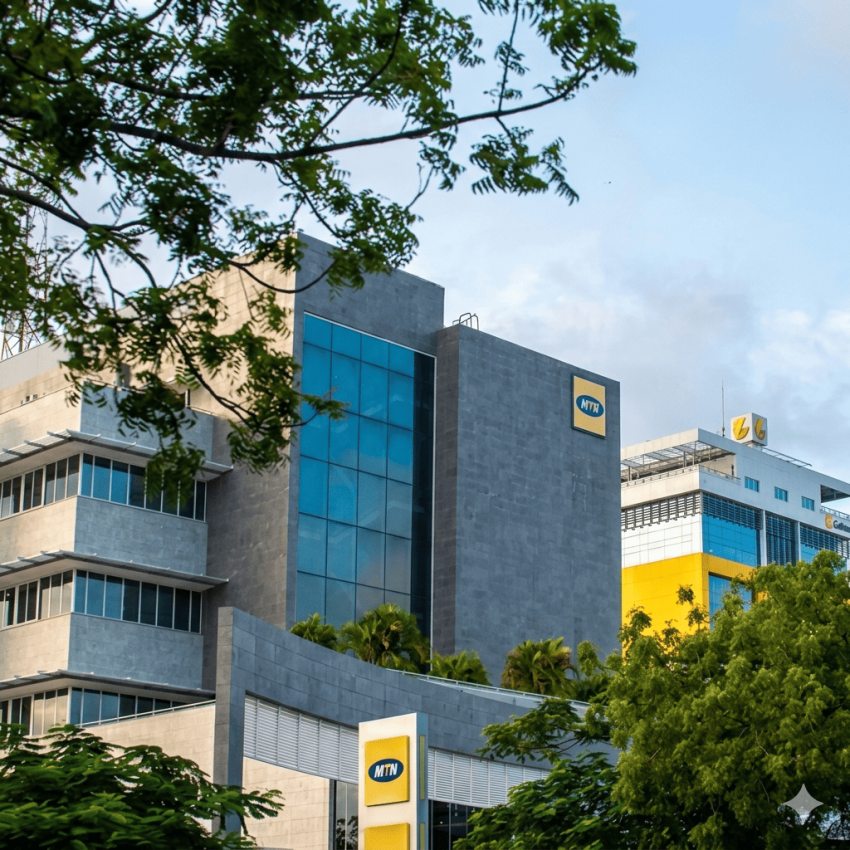
What is going on with your MoMo?
On May 25, 2026, MTN mobile money users received a text message from Mobile Money Fintech Limited. The message announced that starting from June 1, every transfer from your MoMo wallet to a bank account would attract a 0.75% charge, capped at GH¢5 per transaction. If you move GH¢500 to your bank, you pay GH¢3.75. If you move GH¢1,000, you pay GH¢5. The maximum you’d pay on any single transfer, no matter how large, is GH¢5.
For one transfer, that doesn’t sound like much. But if you’re a trader or a business person moving money daily, in fact, multiple times a day, that 0.75% charge is some serious money.
Who is behind this?
Simple answer: Mobile Money Fintech Limited, not MTN Ghana. Until March 31, 2026, MTN Ghana ran its mobile money operations as part of its main telecoms business. Think of it like a restaurant that also offers delivery. Same company, same roof, same management. Then on March 31, MTN separated the MoMo business into its own standalone company: Mobile Money Fintech Limited, or MMFL. The delivery arm became its own separate business.
What happened after the announcement?
Well, you can imagine. A lot of people were not happy. Casual users who keep their money in their MoMo wallet and spend it from there would barely notice. The people who feel this fee most are those who move money regularly between MoMo and their bank accounts. That group is largely small businesses, traders, and importers.
In fact, the backlash was so serious that the Freight Forwarders Association of Ghana, the people who usually coordinate the shipment of goods, like booking cargo space, managing customs clearance, and securing insurance. This particular group came out. Freight forwarders depend heavily on mobile money and digital transactions for port and cargo clearance activities. A 0.75% charge on every wallet-to-bank transfer would have added a recurring cost to every single transaction.
Then the Bank of Ghana stepped in
One day after the announcement, the Bank of Ghana issued a public statement. The Mobile Money Fintech Limited was directed to suspend the implementation of the fee immediately. The June 1 launch date was effectively cancelled. The reason they gave for suspending the implementation was that the organisation had to fully discuss the issue with everyone impacted by it. This suspension serves as a delay until valuable feedback is gathered and the concerns of the people who are impacted are addressed.
So what does it mean for you?
For now, your wallet-to-bank transfer remains free. The Bank of Ghana suspended the fee, but did not abolish it. So, we wait and see what happens. Once something is agreed on, you can always come back to One Page Economics to find out how it will eventually affect you.
Discover more from ONE PAGE ECONOMICS
Subscribe to get the latest posts sent to your email.