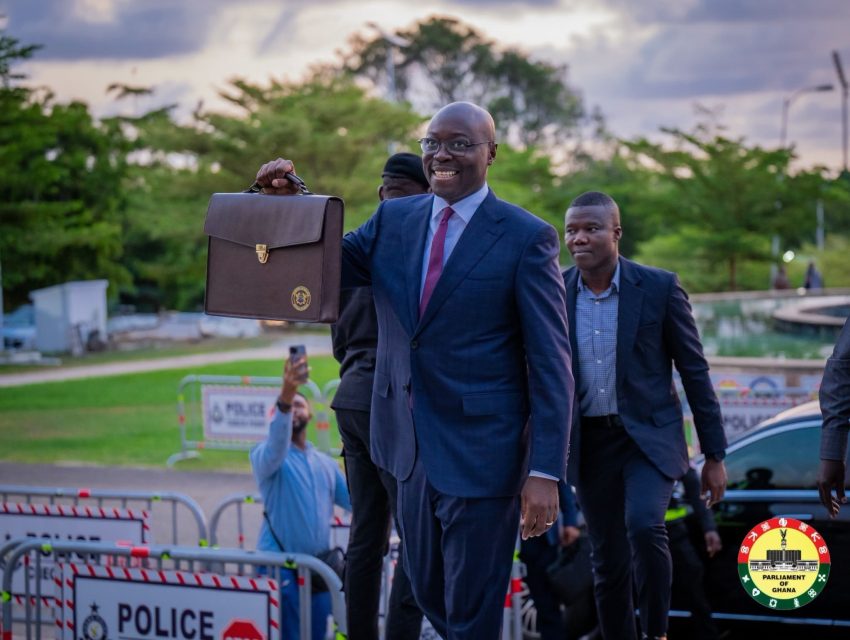
The Minister of Finance read Ghana’s budget for the year 2027 last week. A national budget is simply a breakdown of where the government intends to get money from and how they intend to spend that money. The revenue part tells us where the government intends to get its income from. This can include taxes, fees, duties and sometimes borrowing. The expenditure part tells us how much of the expected revenue the government has allocated to local government, government programs and projects, education, healthcare, etc. What concerns us now is what it means for us: your money, your career and your business.
Let’s Talk about the Budget
Let’s get our calculators out. The government plans to spend roughly US$33 billion (GH¢389.2 billion) in 2027, but expects only about 83% of that to come from revenue and grants, leaving a gap of roughly 17%. How that gap will be closed remains to be seen. On the income side, about 65.8% comes from income, corporate and indirect taxes, 8.6% from fees, charges and dividends, 4.0% from petroleum, 3.9% from other state collections, and 0.8% from grants by development partners. On the spending side, roughly 26.7% goes to salaries, pensions and social security, 25.8% to infrastructure and development projects, and 19.7% to dedicated funds like the District Assemblies Common Fund, GETFund and the National Health Insurance Scheme. The remaining 27.8% or so covers interest, arrears and the daily running costs of government.
What’s in it for you?
Beyond routine spending like salaries and ministry funding, the 2027 budget introduces new programmes that affect everyday life. The biggest is the New Economy Programme. This is a US$10 billion plan to make and process more at home, so we import less and create more jobs. The intuition is that when we grow our own rice and chicken instead of importing them, the money stays in Ghana and pays farmers, factory workers and truck drivers. When we refine our own gold instead of exporting it raw, the refining work, and the profit that comes with it, happens here too.
Health also gets US$3.4 billion. This will cover health insurance, treatment costs for long-term illnesses, and finishing 35 half-built district hospitals. Another US$2.5 billion goes to the Big Push. This is the roads and infrastructure programme. Expect more construction and road works across the country. Early payment for people who lent government money. Finally, US$2.5 billion is set aside to repay those who bought government bonds. They include people who lost out in the 2023 debt swap, which forced them to accept new terms.
What does it mean for you?
The minister says no new taxes in 2027. Instead, the government wants to collect more from the taxes that already exist, by tightening checks and closing leakages. If you pay tax honestly, your rate shouldn’t change. If you’ve been dodging, expect more attention. The next to watch is the review of existing tax laws. “No new taxes” is not the same as “no changes to how existing taxes work”. The details of these changes will matter for your income and your business when it happens.
Then there’s the New Economy Programme. If you work or trade in farming, energy, technology, manufacturing or mining, this is where jobs and contracts are most likely to appear. Because government and the businesses it backs will need builders, suppliers, farmers and transporters to deliver these projects.
The minister also hinted at new incentives for businesses that expand or move into areas Ghana has barely developed, such as processing minerals, making textiles and garments, fish farming, oil palm or tourism. He also announced tax relief on solar equipment. This is just an overview of what the government is planning in 2027. Keep watching this space for the details when they come out, before you start planning around any of this.
Don’t forget to subscribe! You can also join our WhatsApp Community by clicking here
Read more One Page Economics here
Discover more from ONE PAGE ECONOMICS
Subscribe to get the latest posts sent to your email.